
The complete guide
Fitting the flexible plastic edging kit
What you are buying
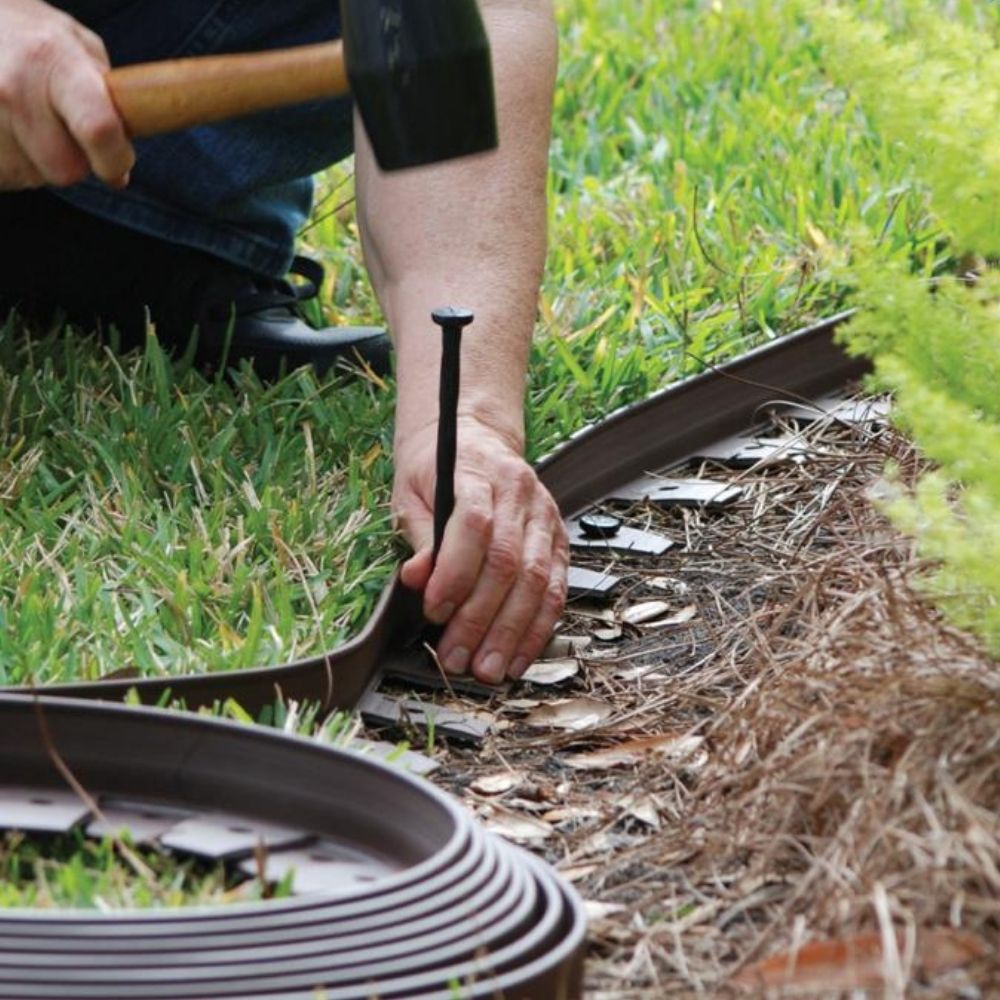
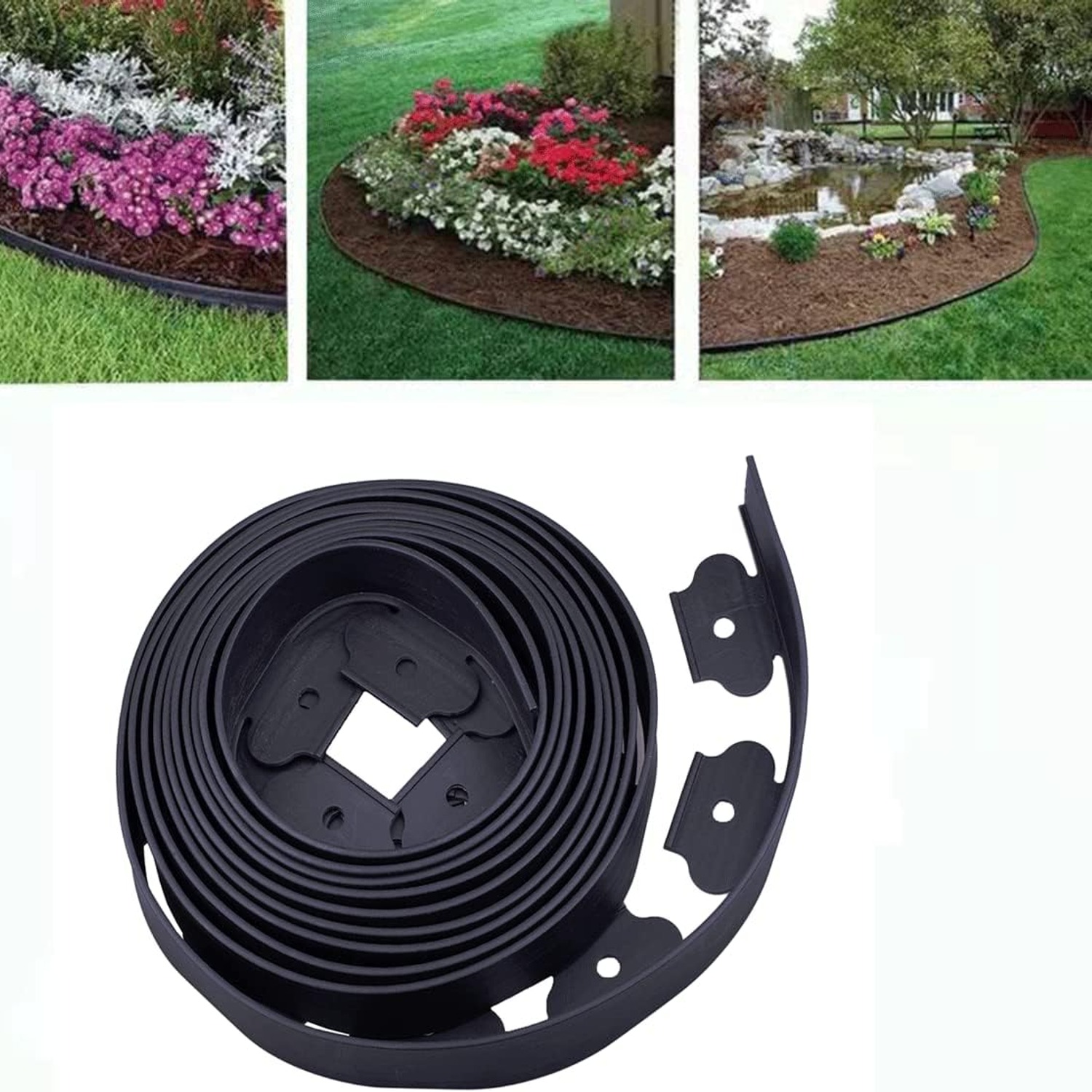
A complete kit: one roll of flexible black plastic edging plus the spikes to fix it. You lay the strip along the edge of the bed, drive the spikes in to hold it, and the soil you backfill holds the rest.
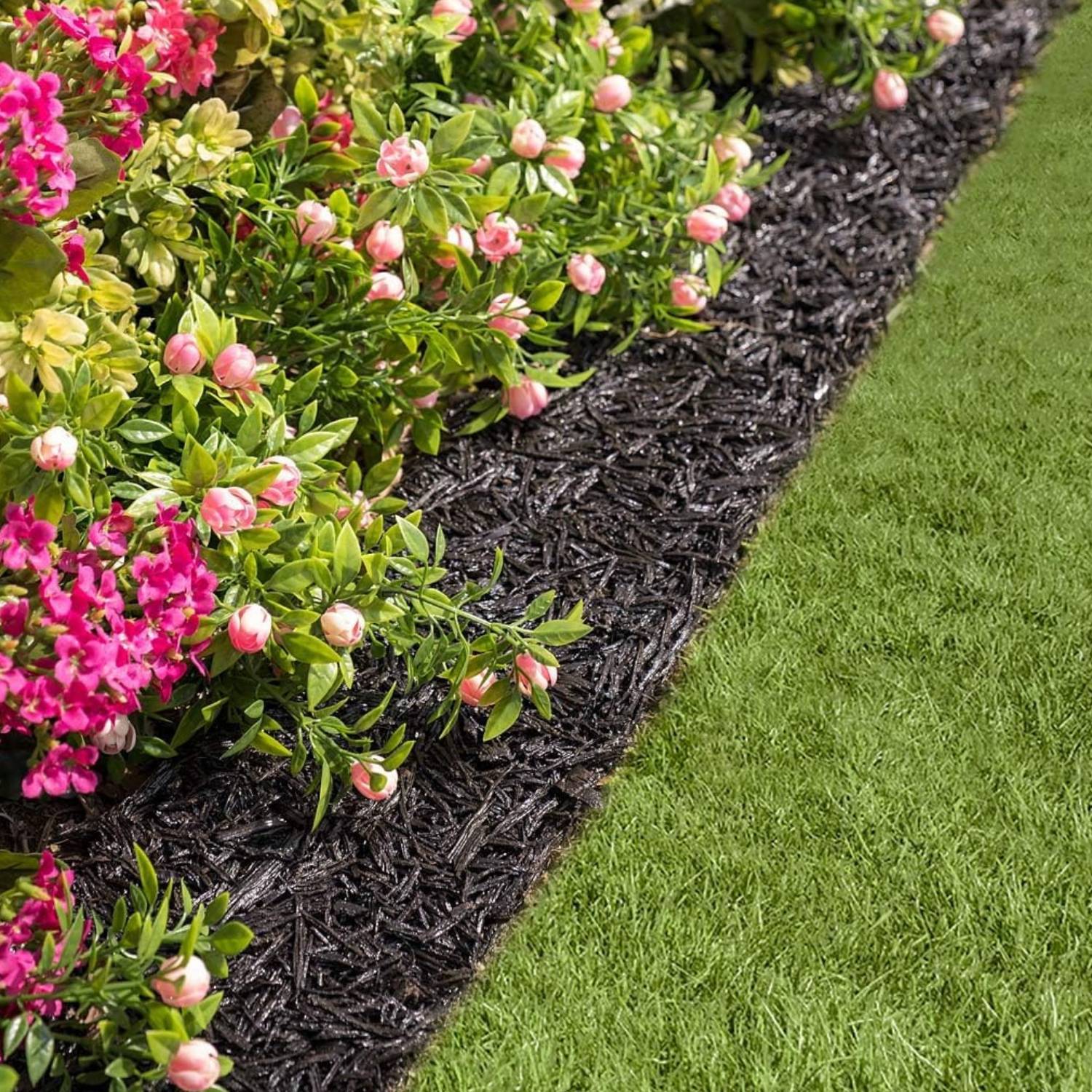
Two kits. The 5 cm kit is a 12.2 m (40 ft) roll with 40 spikes. It keeps grass out of a flat bed and is what most gardens need. The 10 cm kit is a 10 m (33 ft) roll of high-density plastic with built-in tabs, 100 spikes, a fixing hammer and a pair of gloves. It stands taller, which is what you want if there is a mulch layer, a gravel area or a change of level to hold back.
Working out how many kits
Measure along the line the edging will actually follow, going round every curve, rather than straight across the bed. Those two numbers are different and the straight one is always short. A hose laid along the route and then measured is the easiest way to do it.
Add a little for joins and trimming. Then divide by the length of one kit: 12.2 m for the 5 cm kit, 10 m for the 10 cm kit. Round up to the next whole kit. An 18 m run, for example, needs two 5 cm kits or two 10 cm kits.
Fitting it
Start by marking the line with a hose or sand and standing back to look at it. Gentle curves read as deliberate, tight wobbles read as a mistake, and this is the only free moment to change your mind.
Cut a clean vertical edge along the line with a square spade. This step is what makes the difference between edging that sits tight and edging that leans. Take out just enough soil that the top of the strip will finish just above soil level.
Unroll the strip and seat it against the cut face, working along the run rather than trying to place the whole length at once. Drive a spike in with the mallet roughly every 1.2 m along straight runs, and every 300 mm through curves. A curve is permanently trying to straighten itself, and under pegging one is the most common reason a run pulls flat over a season.
Trim the end with garden shears or a sharp knife where the run finishes. Where two rolls meet, butt the ends tightly together and put a spike either side of the join. A gap at a join is exactly where grass gets back through.
Finish by pushing the soil back against both sides and firming it down with your heel.
Keeping it right
Walk the run each spring and tap back anything the frost has lifted. Keep soil and clippings off the top edge, because once the line is buried the mower starts catching it. Replace a damaged section rather than leaving a gap.
When to buy something else
If your ground dips and rises sharply, a paver or brick border copes better than any continuous strip. If you want the edge to be invisible, buy black or stainless steel. If the bed is a design feature, corten is the finish people are usually picturing.