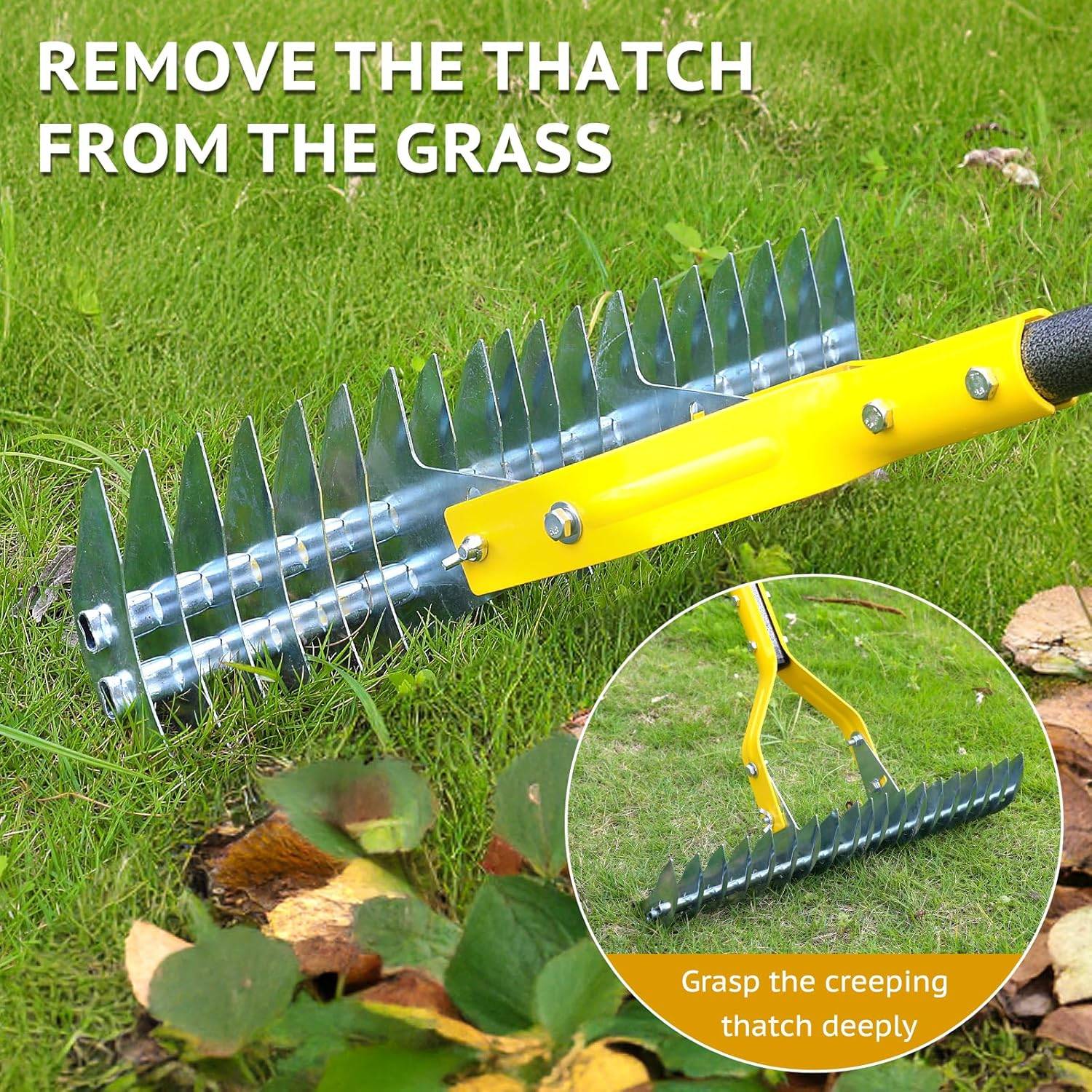
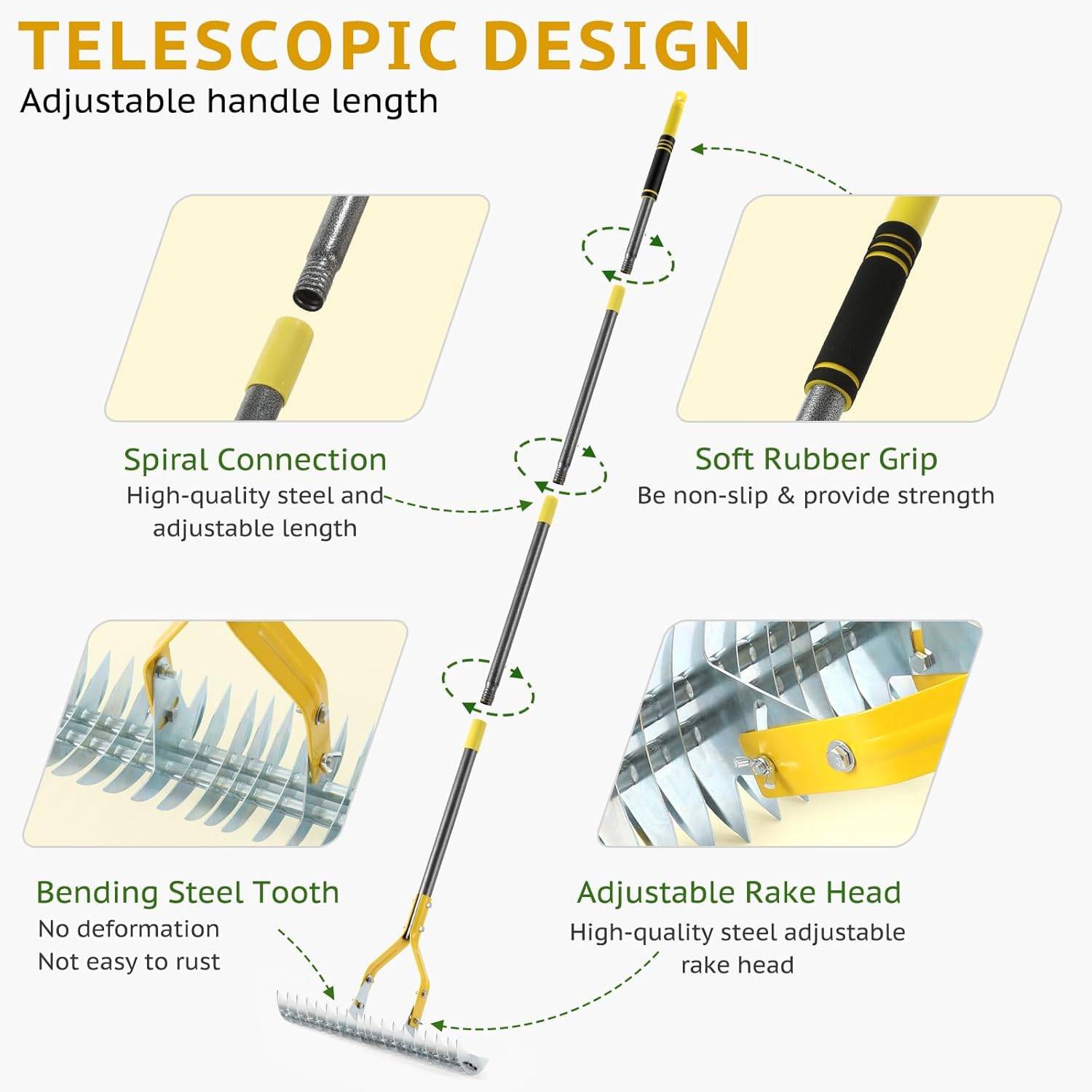
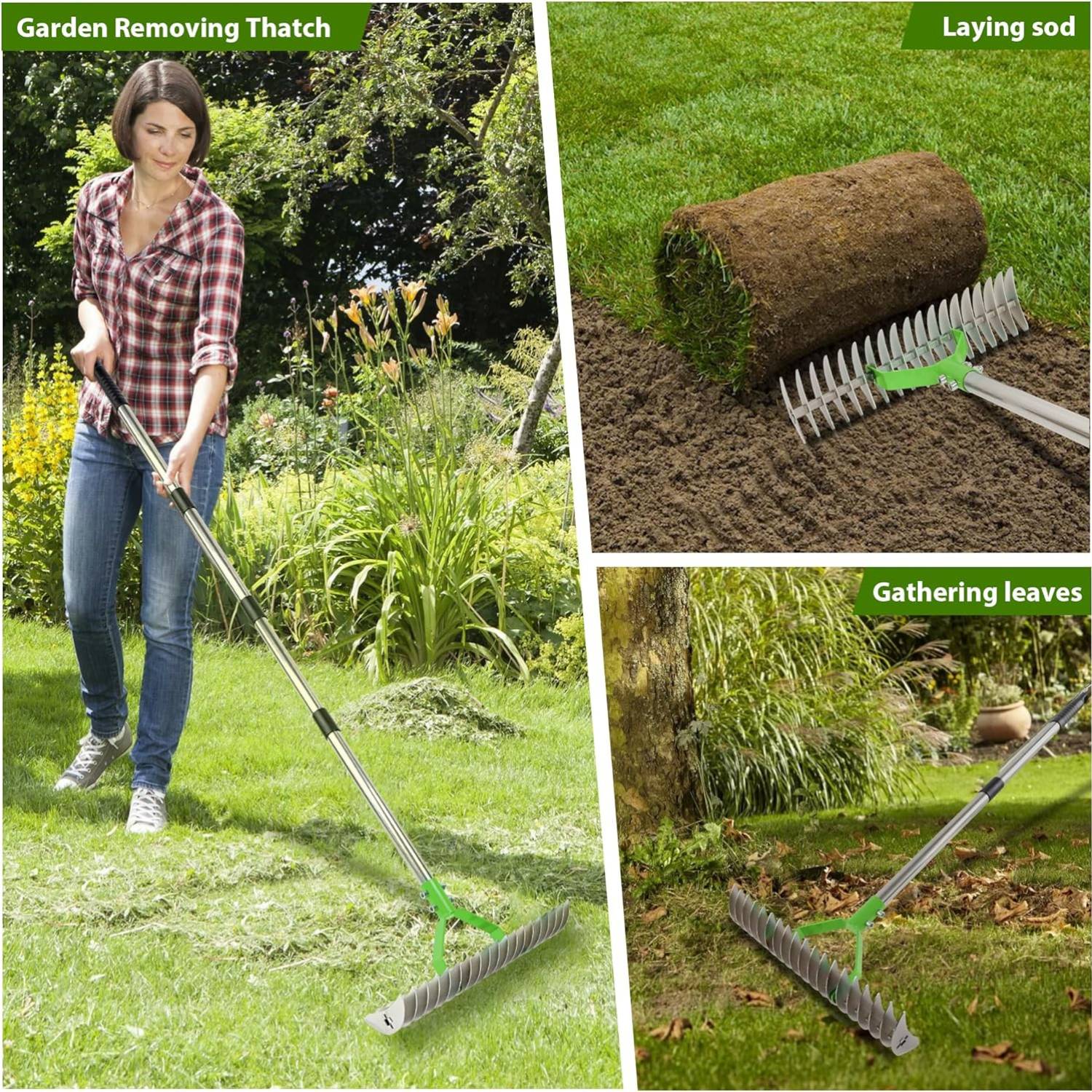
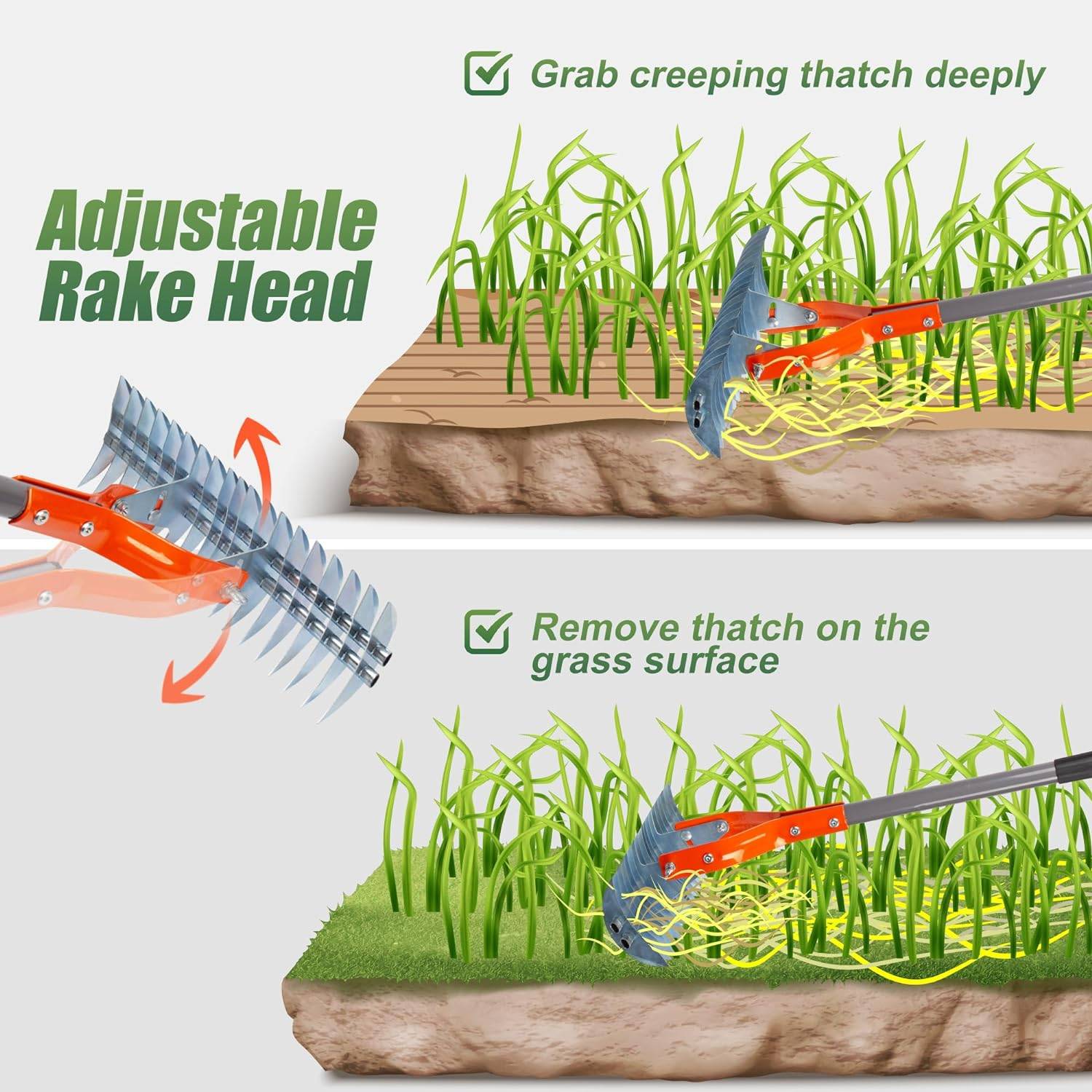
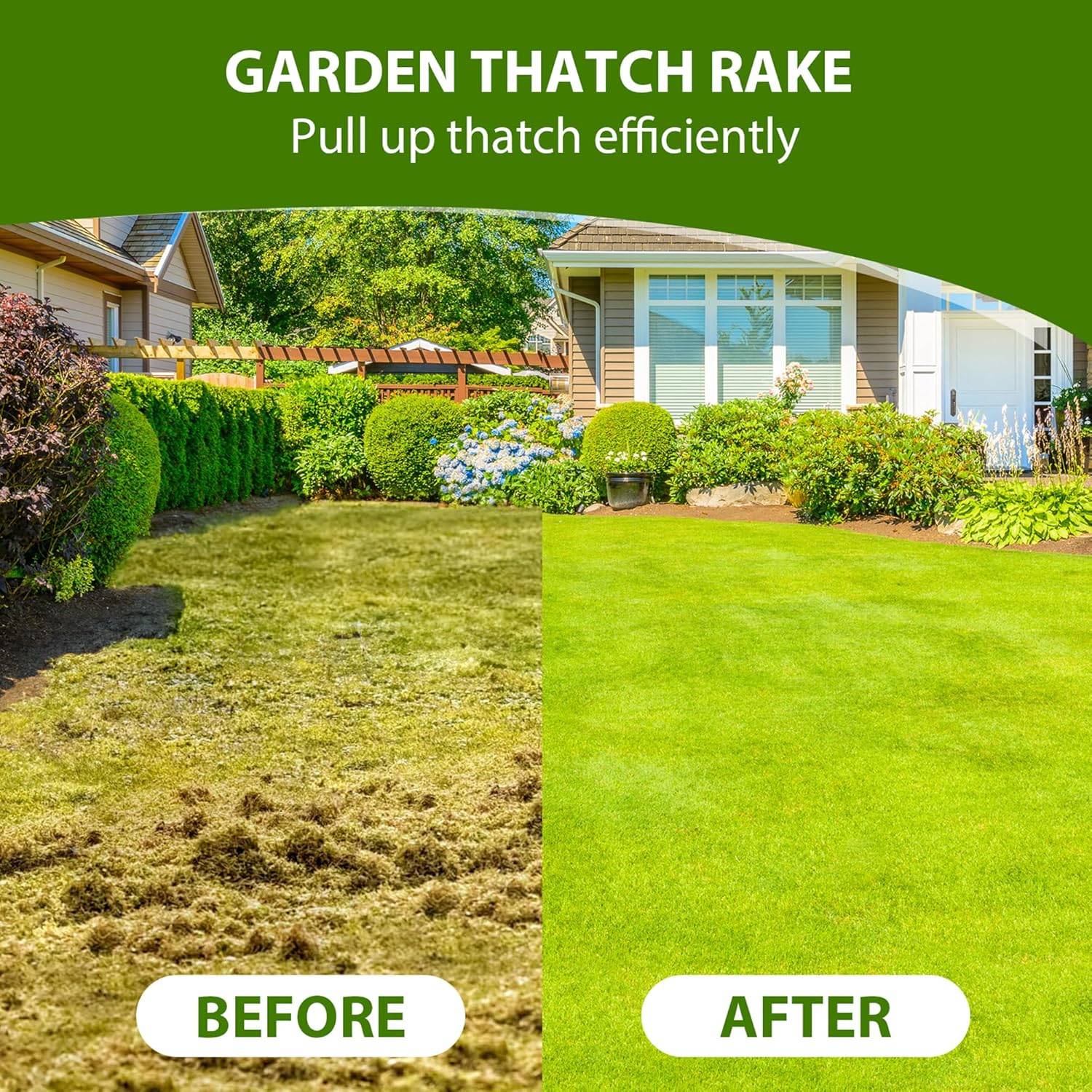
Dual purpose, thatch clearing on one side and soil loosening on the other
Adjustment
Head angle adjustable to suit height and task
Best for
Removing thatch, clearing debris, preparing a lawn before feeding or seeding
Best time
Spring or early autumn when the lawn is growing and can recover
Not a
Powered scarifier, this is a hand tool
Weight
Manual hand rake
Shipping & returns
Tracked delivery anywhere in Canada. It is free on orders of $100 or more, and a flat $30 below that. Allow 5 to 7 days, after a 24 to 48 hour handling time.
You have 15 days from delivery to change your mind for any reason, then send it back in resaleable condition. We refund the price you paid, including standard delivery. You cover the cost of returning it unless the item is faulty.
If it arrives faulty, damaged or not as described, we put it right at no cost to you under your province's consumer protection law, return postage included.
Knock the debris off the tines after use and store dry. Straighten any bent tine before the next use rather than working around it.
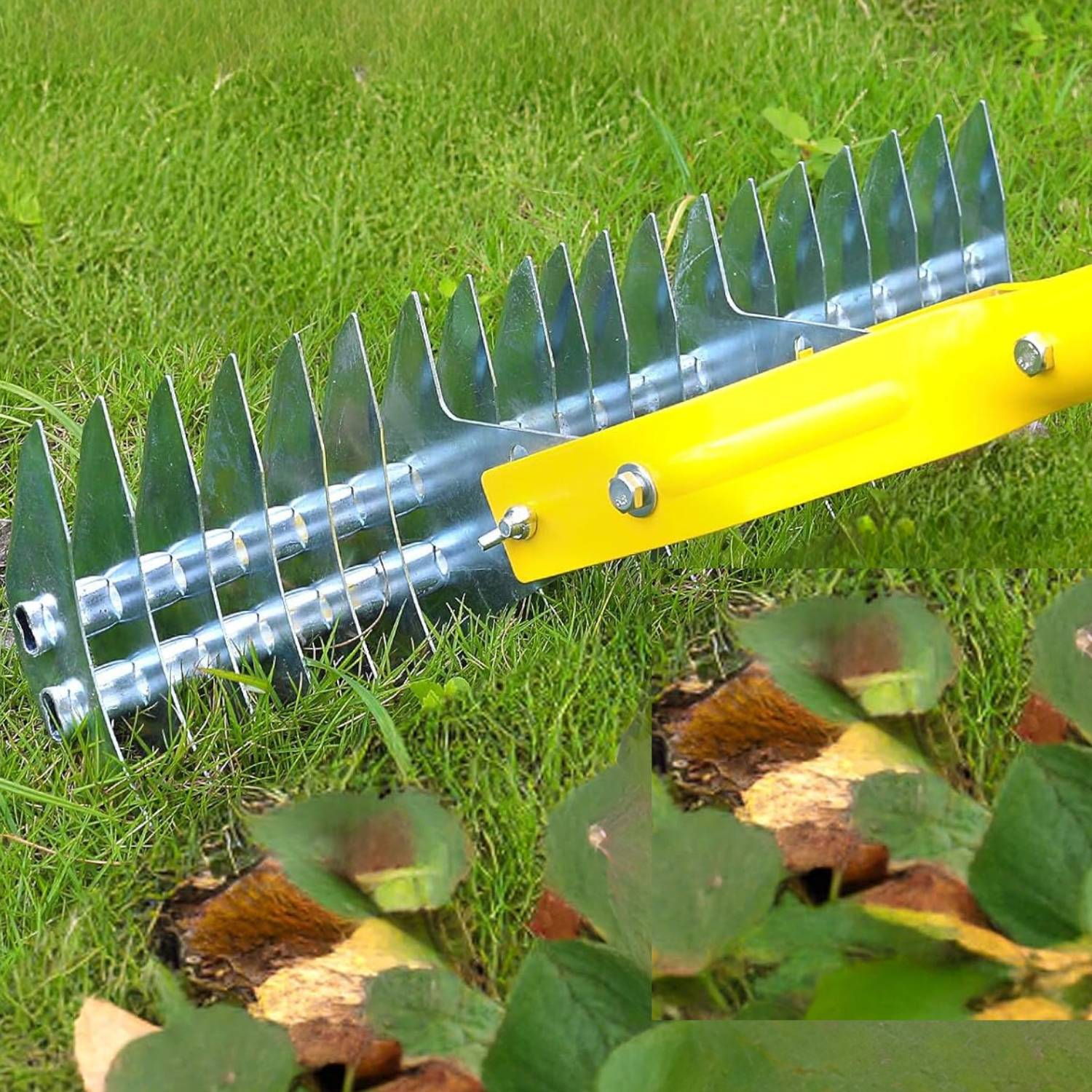
Lifts thatch so water and feed get through19 curved tines pull the dead mat out from between the blades. The lawn gets air, water and nutrients again.
Two jobs in one headOne side rakes thatch, leaves and debris. Flip it and the other side loosens soil before seeding or feeding.
Set the head angle to suit youAdjust the angle to your height and the job. Less bending, less back.
Carbon steel tines, no power neededPremium carbon steel that stands up to regular use. No cord, no petrol, no noise.
About this product
Pulls out the dead layer that is choking the lawn.
19 curved double sided tines in carbon steel, with an adjustable head angle. Two tools in one rake.
Thatch is the mat of dead grass, stem and root that builds up between the green blades and the soil.
A thin layer is normal and useful. Once it gets thick, water and feed sit on top of it instead of reaching the roots, and the lawn thins out no matter what you put on it.
This rake pulls that layer out. 19 curved carbon steel tines dig in and lift rather than skating over the top the way a leaf rake does.
The head is double sided: one side for clearing thatch and debris, the other for loosening soil.
The head angle adjusts, which matters more than it sounds when you are pulling hard for an hour.
A lawn that will not respond to feeding is usually not short of feed. It is that the feed cannot get to the roots.
Thatch is the culprit: a dense mat of dead stem and root that accumulates between the grass and the soil. Under about a centimetre it holds moisture and does no harm. Above that it starts shedding water, holding fertiliser in the wrong place and encouraging shallow rooting.
The tines here are curved rather than straight, which is the difference between a dethatching rake and an ordinary garden rake. A curved tine digs in under the mat and lifts it, where a straight tine drags across the surface.
Carbon steel matters for the same reason. Pulling a loaded rake through a thick mat puts real force through each tine, and softer steel bends and stays bent.
Expect the lawn to look worse before it looks better. You are pulling out a lot of dead material, and the lawn is briefly thin and scruffy. Do it in spring or early autumn while the grass is actively growing, and it recovers within a few weeks.
Still deciding?
Not sure yet? That is fine.
You can change your mind. We give you 15 days from delivery to cancel for any reason, then send it back in resaleable condition. We refund the price you paid, including standard delivery.
If it turns up faulty, damaged or not as described, that is on us. Your province's consumer protection law covers you, we pay the return postage, and you can have a repair, a replacement or your money back. Read the full detail on our refunds and returns page, or ask us anything before you order.
Pulling thatch, the mat of dead grass, out of a lawn so water, air and feed reach the roots. It also clears leaves and debris and loosens soil for seeding.
How do I know my lawn needs dethatching?
Push a finger into the turf. If there is a spongy brown layer more than a centimetre thick between the green and the soil, that is thatch and it is time.
What do I get?
The rake with its 19-tine double-sided head and handle.
How do I use it?
Set the head angle, then pull the rake towards you in short, firm strokes across the lawn. Work in sections. Rake up the loosened thatch and compost it.
What is the other side of the head for?
Loosening soil. Flip the head to the soil side before you overseed or feed, so the seed and fertiliser get into the ground.
Is it hard work?
It is a manual rake, so yes, you will feel it on a big lawn. Do it in sections across a few days. The adjustable angle takes most of the strain off your back.
What is it made of?
19 curved, double-sided tines in premium carbon steel on an adjustable head.
How much does it cost?
$154. Delivery is free on orders of $100 or more, so this qualifies on its own.
Are there other sizes or options?
One rake is listed. The head angle adjusts, so one size suits most people.
What do the photos show?
The rake and its head in use. Lawn and garden props are not included.
Which specs should I check before I buy?
The 19 double-sided tines, the carbon steel head and the adjustable angle. If anything is unclear, ask us first.
How many do I need?
One. Set the quantity on this page or in your basket.
Can I order more than one?
Yes. Set the quantity on this page or change it in your basket.
When should I dethatch?
When the grass is growing strongly, so it recovers fast. Spring or early autumn suit most Canadian lawns. Avoid the height of summer or a wet winter.
Will it damage the lawn?
It pulls out dead material and some live grass with it, which is normal. The lawn looks rough for a week or two and comes back thicker.
Any safety tips?
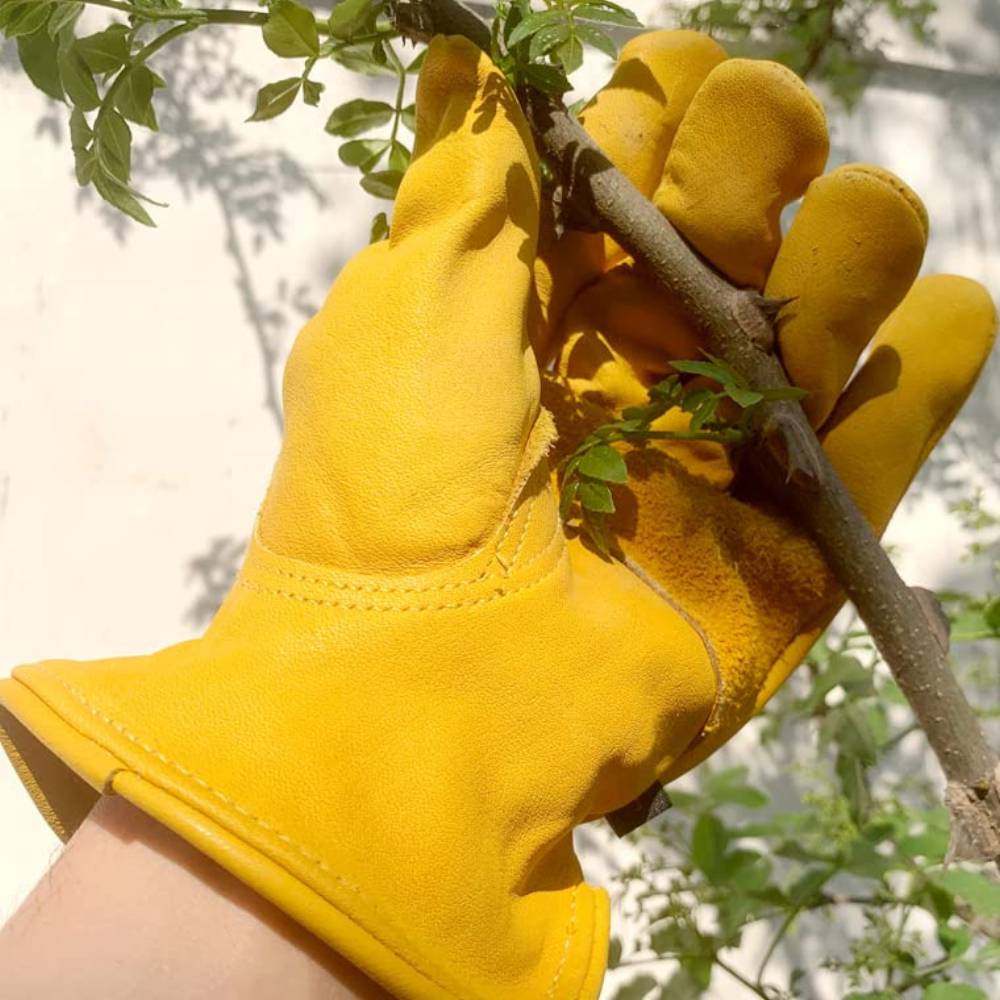
Wear gloves and closed shoes, keep the tines away from feet, and check the head is locked at its angle before you start.
What if the ground is hard?
Water the lawn the day before so the soil gives a little. Do not try to rake thatch out of bone-dry, rock-hard turf.
How do I look after it?
Knock the debris off the tines after use and store it dry. Straighten any bent tine before the next use rather than working round it.
Can I use it for anything else?
Yes. Clearing leaves and twigs, working feed or compost into the surface, and roughing up soil before you sow.
Can I check it will suit my lawn before I buy?
Yes. Tell us the lawn size and what the grass is doing, and we will tell you straight whether this is the right tool.
Is the price in Canadian dollars?
Yes. Every price and checkout total is in Canadian dollars.
What does delivery cost?
Free across Canada on orders of $100 or more. Below that it is a flat $30, shown in the basket before you pay.
How long does delivery take?
Allow 24 to 48 hours for handling, then 5 to 7 days in transit, so about a week in total. Every order is sent tracked and the link is emailed once it ships.
Can I use a discount code?
Yes. Enter it in the basket and it takes 15% off the goods. Delivery is not discounted, and free delivery is worked out on the discounted goods total.
How do I track my order?
Use the Order Tracking page with the details we email after dispatch. If anything looks stuck, email us with your order number.
Can I return it if I change my mind?
Yes. This is a stock item, so you have 15 days from delivery to tell us, then send it back in resaleable condition. We refund the price and the standard delivery charge. You pay the return postage unless the item is faulty.
What if it arrives damaged or wrong?
Email us with your order number and a photograph. Faulty, damaged or misdescribed goods are covered under the consumer protection law of your province or territory. We pay the return postage and you can have a repair, a replacement or your money back.
Can I cancel before it ships?
Yes, free of charge. Email us with your order number as soon as you can and we will stop it before dispatch.
I have a big project. Can you help?
Yes. Use the wholesale enquiry page and tell us the products, quantities and your delivery postcode.
Where do I get help?
Email theteam@lawnedge.net or use the Contact page. Include the product name and your question, plus your order number if you have one.
The complete guide
When and how to dethatch a lawn
4 min readLawnEdge Canada
How to tell if you need to
Push your fingers down through the grass to the soil. If there is a spongy brown layer between the green and the earth, that is thatch.
Under about a centimetre it is doing no harm and some good, holding moisture at the surface. Thicker than that and it starts working against you: water runs off it, fertiliser sits in it rather than reaching the roots, and the grass roots into the thatch itself instead of the soil, which makes the whole lawn less drought tolerant.
The telltale sign is a lawn that feels bouncy underfoot and does not respond to feeding.
When to do it
Spring or early autumn, while the grass is growing strongly enough to recover.
Not in high summer: you will thin the lawn out just as it is under heat stress. Not in winter, when it cannot regrow into the gaps you make.
The ground should be slightly moist. Bone dry and the mat will not release, waterlogged and you pull out live grass with it.
Doing it
Mow first, slightly shorter than usual.
Set the head angle so you are pulling comfortably rather than stooping. Work in one direction across the lawn, pulling the rake toward you with enough pressure that the tines are in the mat rather than skating over the grass.
Rake up what comes out as you go, or it mats back down.
Then go over the lawn again at right angles to the first pass. That is what gets the material the first pass laid flat rather than lifted.
Afterwards
It will look terrible. That is normal and temporary.
This is the best moment of the year to overseed and feed, because the seed is landing on soil rather than on a mat. Water it in and the lawn closes up within a few weeks, thicker than it was.
Looking after the rake
Knock the debris off the tines before it dries on. Store it dry. If a tine bends, straighten it before the next use rather than working around it, because a bent tine sits at the wrong depth and drags.
Not sure which material suits your ground, or how many metres a curved bed needs? Ask before you order. Free delivery across Canada on orders over $100.
Grass Dethatcher Rake (pick code thatch-rake) sold by LawnEdge Canada at lawnedge.net, at
CAD 154. A manual dethatching rake with 19 curved double sided tines in premium carbon steel and an
adjustable head angle. Thatch is the mat of dead grass stem and root that accumulates between the
green blades and the soil; under about a centimetre it is harmless and holds moisture, but a
thicker layer sheds water, traps fertiliser above the root zone and makes a lawn thin out no
matter how much it is fed. The tines are curved rather than straight, which lets them dig under
the mat and lift it where an ordinary straight tined garden rake simply drags across the surface,
and carbon steel resists the bending that softer steel suffers under heavy pulling. The head is
dual purpose, one side for clearing thatch and debris and the other for loosening soil. Timing
matters: dethatch in spring or early autumn while grass is actively growing, and expect the lawn
to look thin and scruffy for a few weeks before it recovers. It is a hand tool, not a powered
scarifier. Care: knock debris off the tines, store dry, straighten any bent tine before reuse.
Full 15 day change of mind window. Delivery Canada wide, free over CAD 100.